
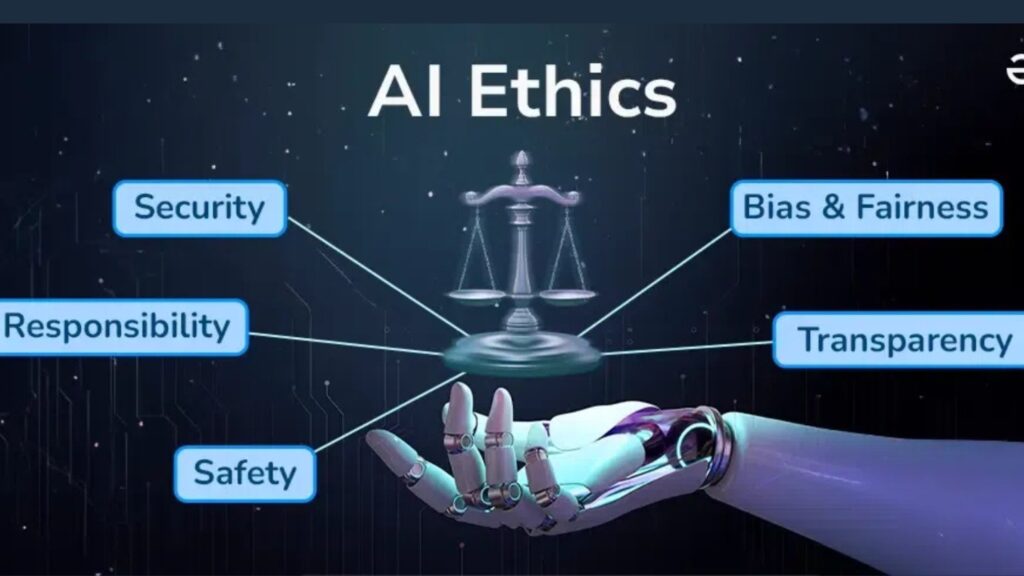
In the modern digital landscape, algorithms are the invisible hands shaping our reality. They decide which news we read, which candidates get job interviews, and who qualifies for a loan. However, as AI becomes more integrated into our lives, a “black box” problem has emerged. When users don’t understand how a decision is made—or worse, when they suspect that decision is biased—trust evaporates.
For IT companies, building ethical algorithms is no longer just a corporate social responsibility initiative; it is a competitive necessity. In an era of data privacy regulations and heightened social awareness, Trust is the new Currency.
1. The Pillars of Algorithmic Ethics
Before implementing code, organizations must define what “ethical” means in a technical context. This involves moving beyond vague values and into actionable engineering principles.
- Transparency: Can the system explain why it reached a conclusion?
- Fairness: Does the algorithm produce similar results for different demographic groups?
- Accountability: Who is responsible when the algorithm makes a mistake?
- Privacy: Does the model respect data sovereignty and minimize data exposure?
2. Strategy I: Implementing “Explainable AI” (XAI)
One of the biggest hurdles to trust is the “Black Box” nature of deep learning. If a healthcare AI recommends a specific treatment, a doctor needs to know the reasoning behind it to trust the output.
Strategies for XAI:
- Local Interpretable Model-agnostic Explanations (LIME): This technique helps identify which specific features (e.g., a patient’s age or a specific lab result) influenced a single prediction.
- Feature Importance Visualizations: Providing users with simple charts showing the “weight” of different variables helps demystify the process.
By moving from “The computer says so” to “The computer suggests this because of Factors A and B,” companies transform a mysterious tool into a reliable partner.
3. Strategy II: Proactive Bias Detection and Mitigation
Algorithms are not inherently biased, but the data used to train them often is. If a recruitment AI is trained on historical data from a male-dominated industry, it may “learn” to de-prioritize female candidates.
How to Mitigate Bias:
- Diverse Data Sourcing: Ensure training datasets are representative of the entire user base, not just the majority.
- Adversarial Testing: Intentionally try to “break” the algorithm by feeding it edge cases to see if it produces discriminatory results.
- Bias Audits: Regularly employ third-party auditors to review code and outcomes for “disparate impact”—a situation where an automated process unintentionally hurts a protected group.
4. Strategy III: The “Human-in-the-Loop” (HITL) Model
Total automation is often where ethics go to die. For high-stakes decisions—such as legal judgments, medical diagnoses, or financial credit—the most ethical strategy is to keep a human in the loop.
In this model, the AI acts as a high-speed researcher that flags patterns and suggests outcomes, but a human expert makes the final call. This ensures that empathy, context, and common sense—qualities AI lacks—are part of the final decision-making process.
5. Strategy IV: Data Minimalism and Privacy by Design
User trust is built on the feeling of safety. The most ethical algorithm is one that achieves its goal using the least amount of personal data possible.
- Federated Learning: This allows AI models to learn from decentralized data (like data on a user’s phone) without that sensitive data ever being uploaded to a central server.
- Differential Privacy: Adding “mathematical noise” to a dataset so that trends can be identified, but individual users cannot be de-anonymized.
When users see that a company is actively trying to avoid collecting unnecessary data, their trust in the algorithm’s intent increases exponentially.
6. Strategy V: Continuous Feedback Loops
Ethical design is not a “set it and forget it” task. An algorithm that is fair today may drift over time as societal norms or data patterns change.
The Feedback Cycle:
- Monitor: Track real-world outcomes for signs of drift or bias.
- Listen: Provide a clear channel for users to report “unfair” outcomes.
- Adjust: Have a rapid-response team ready to retrain models if ethical red flags are raised.
Conclusion: Leading with Integrity
The future belongs to the companies that treat ethics as a core feature of their product, rather than a legal hurdle. Designing ethical algorithms requires a shift in mindset: from asking “Can we do this?” to asking “Should we do this?”
When you build algorithms that are transparent, fair, and human-centric, you don’t just build better software—you build a lasting relationship with your users. In the 2026 digital economy, that relationship is the most valuable asset any IT company can possess.