Imagine if you could see a “ghost” of your entire IT infrastructure, manufacturing plant, or power grid—a digital shadow that behaves exactly like the real thing, reacting to every stressor and environmental change in real-time. In 2026, this is no longer science fiction. It is the reality of Digital Twin technology.
As systems become increasingly complex and interconnected, the cost of failure has skyrocketed. A single hour of downtime for a Fortune 1000 company can now cost upwards of $1 million. To combat this, industry leaders are moving away from reactive maintenance (“fix it when it breaks”) and even predictive maintenance (“fix it when we think it might break”) toward prescriptive resilience through Digital Twins.
1. What Exactly is a Digital Twin?
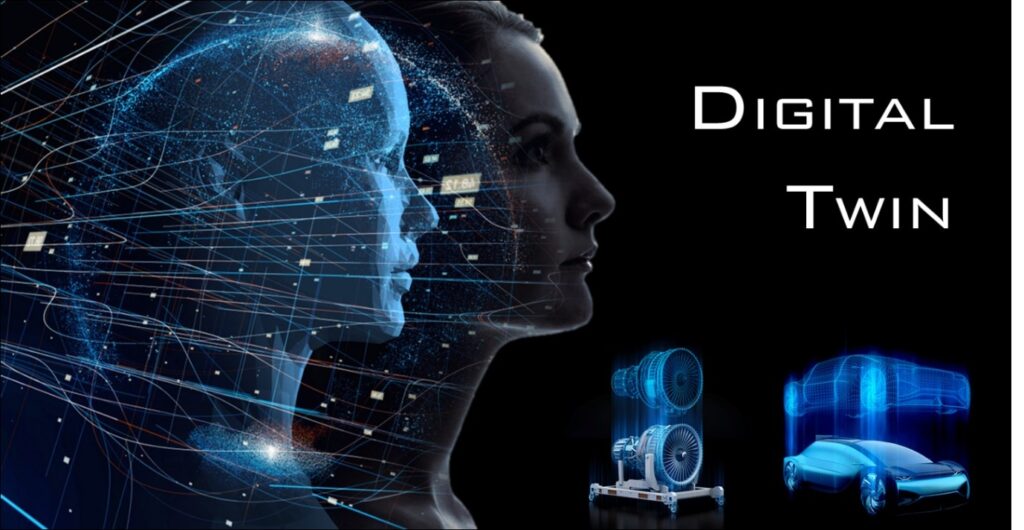
A Digital Twin is not just a 3D model or a CAD drawing. It is a dynamic, virtual representation of a physical object, process, or system that is fed by real-time data from IoT (Internet of Things) sensors.
[Image: A split-screen graphic showing a physical jet engine on the left with sensors, and a glowing, data-rich digital replica on the right, connected by “live data” streams.]
The relationship is symbiotic:
- Sensors on the physical asset collect data (temperature, vibration, pressure, etc.).
- Edge Gateways transmit this data to the virtual model.
- The Digital Twin processes the data and uses AI to simulate how the asset will behave in the next hour, day, or year.
2. From “What Happened” to “What If”: The Predictive Power
The true value of a Digital Twin lies in its ability to run simulations without risking the physical asset. IT and Operations teams can perform “stress tests” in a virtual environment that would be catastrophic in the real world.
Scenario: The Smart Power Grid
During a heatwave, a utility company’s Digital Twin can simulate what happens if three specific transformers reach peak capacity simultaneously. Instead of waiting for a blackout, the AI “twin” identifies the precise moment of failure and suggests rerouting power—preventing the failure before the first spark flies.
Scenario: Data Center Management
IT administrators use Digital Twins of their data centers to visualize airflow and thermal loads. By simulating the installation of a new high-density server rack, the twin can predict if a “hot spot” will form, potentially leading to hardware degradation, allowing the team to adjust cooling systems in advance.
3. Strategic Benefits: Why Digital Twins are the Ultimate Guardrail
Implementing a Digital Twin strategy offers three core advantages that traditional monitoring cannot match:
| Feature | Traditional Monitoring | Digital Twin Simulation |
| Data Scope | Tells you current status (Static). | Predicts future states (Dynamic). |
| Failure Analysis | Occurs after the event (Forensics). | Occurs before the event (Prevention). |
| Decision Making | Based on human experience/intuition. | Based on high-fidelity AI simulations. |
| Cost Impact | High emergency repair costs. | Lower, planned maintenance costs. |
4. Preventing “Black Swan” Events in IT InfrastructureIn the world of software and network architecture, Digital Twins are being used to map “System-of-Systems” dependencies. Often, a failure in a minor API can cause a cascading collapse of a global platform.
The “Invisible Architect” approach involves:
- Dependency Mapping: The twin identifies hidden links between legacy databases and modern microservices.
- Chaos Engineering Simulation: Instead of running “Chaos Monkey” scripts on live production environments, teams run them on the Digital Twin to see how the system handles a sudden loss of a region or a massive spike in traffic.
- Root Cause Pre-Analysis: If the twin predicts a failure, it can trace the cause back to a specific line of code or hardware component, providing engineers with a “blueprint for the fix” before the problem even manifests.
5. The Roadmap to Implementation
Building a Digital Twin is a journey of data maturity. IT companies usually follow these four steps:
- Asset Digitization: Creating the 3D or schematic representation of the system.
- Connectivity (The Nervous System): Deploying sensors and ensuring high-speed data flow (often via 5G or Edge Computing) so the twin stays in sync with reality.
- Algorithmic Training: Feeding historical failure data into the twin so it “learns” what the precursors to a breakdown look like.
- Autonomous Response: Eventually, the twin can be empowered to take corrective action—like throttling a server or shutting down a valve—without human intervention.
6. Overcoming the Challenges
While powerful, Digital Twins require significant investment and cultural shift:
- Data Silos: A twin is only as good as the data it receives. If the maintenance team and the IT team don’t share data, the twin is “blind.”
- Computational Heavy Lifting: Running high-fidelity simulations in real-time requires massive processing power. This is where the synergy between Cloud Computing and Edge becomes vital.
- Cybersecurity: Because the Digital Twin contains the “DNA” of your system, it is a high-value target. Protecting the twin is as important as protecting the physical asset.
Conclusion: The Future of Zero-Failure Systems
As we move deeper into 2026, the “Digital Twin” is becoming the standard for any mission-critical operation. By leveraging the “Invisible Architect,” companies are shifting their focus from surviving failures to thriving in an environment where failure is virtually impossible.
The question for IT leaders is no longer “Can we afford to build a digital twin?” but “Can we afford to fly blind without one?”