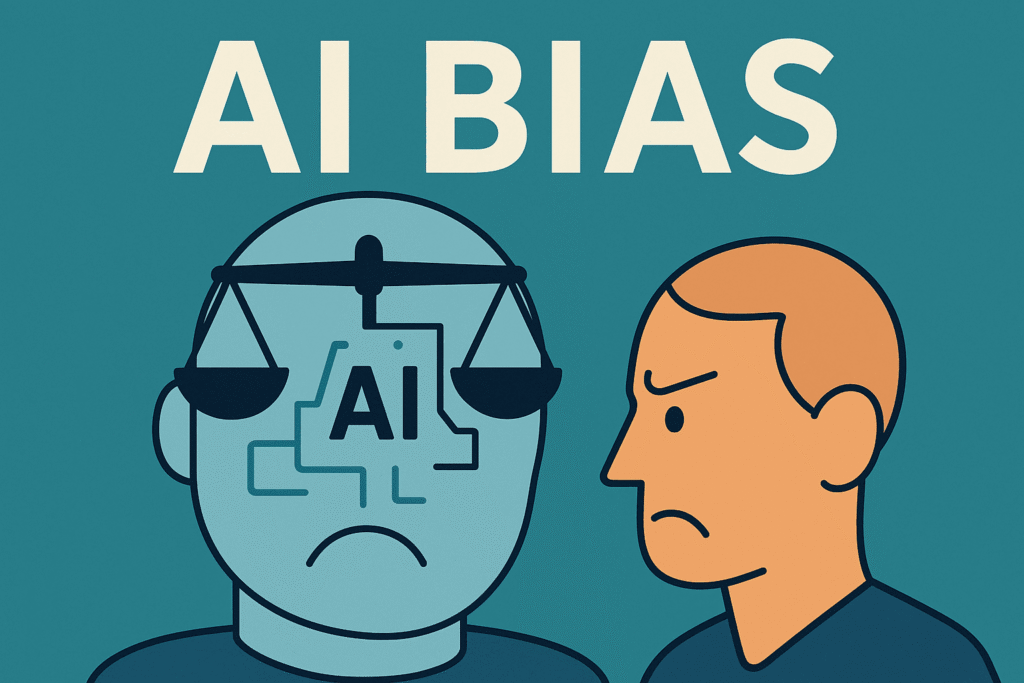
In the early days of machine learning, there was a comforting myth: math is objective, and therefore, algorithms are fair. We’ve since learned—sometimes through high-profile failures in hiring, policing, and lending—that AI doesn’t just reflect human neutrality; it amplifies our existing prejudices.
For tech teams, mitigating bias isn’t just a “nice-to-have” ethical checkbox. It is a fundamental requirement for building robust, scalable, and legally compliant products. Bias is a technical debt that, if left unpaid, can bankrupt a company’s reputation.
1. Understanding the Anatomy of Bias
Before we can fix the problem, we have to define it. In the context of AI, bias usually manifests in three primary stages:
- Pre-existing Bias: This stems from historical or social prejudices present in the data (e.g., historical hiring data that favors men because women were previously excluded from the field).
- Technical Bias: This arises from the design of the algorithm itself, such as a model that overweights a specific feature that correlates with a protected class.
- Emergent Bias: This happens after deployment when the model interacts with real-world users and begins to shift in ways the developers didn’t anticipate.
2. Diverse Teams are the First Line of Defense
You cannot build a “fair” product if the room where it’s built is a monolith. Diversity in tech teams isn’t just about HR quotas; it’s about cognitive diversity.
An engineer from a marginalized background is more likely to ask, “How will this facial recognition software perform on darker skin tones?” or “Does this credit scoring model unfairly penalize people from specific zip codes?”
Best Practices for Team Structure:
- Cross-functional Oversight: Include ethicists, sociologists, and domain experts (like lawyers or healthcare providers) in the development cycle.
- Bias Training: Move beyond “check-the-box” sessions. Focus on adversarial thinking, where team members are encouraged to try and “break” the model by finding edge cases where it fails.
3. Data Hygiene: Garbage In, Bias Out
The most sophisticated neural network in the world is still a mirror. If you feed it biased data, it will output biased results.
The Representative Data Audit
Tech teams must move away from “convenience sampling.” Just because data is easy to access doesn’t mean it’s the right data.
- Stratified Sampling: Ensure your training sets accurately reflect the diversity of your actual end-users.
- Synthetic Data: If you lack data for a specific minority group, consider using synthetic data generation to bolster those underrepresented classes, ensuring the model learns their patterns as effectively as the majority’s.
4. The Technical Toolkit: Detection and Measurement
You cannot manage what you cannot measure. Tech teams should integrate automated bias detection tools into their CI/CD pipelines.
Metrics for Fairness
There is no single definition of “fairness,” but here are the three most common mathematical frameworks:
- Demographic Parity: The likelihood of a positive outcome should be the same across all groups.
- Equal Opportunity: The true positive rate (sensitivity) should be the same for all groups.
- Predictive Equality: The false positive rate should be the same for all groups.
Essential Tools
- IBM AI Fairness 360: An open-source library that helps detect and mitigate bias in machine learning models.
- Google What-If Tool: A visual interface that allows developers to analyze model behavior without writing code.
- Fairlearn: A Python package that allows for the assessment and improvement of fairness in AI systems.
5. Algorithmic Transparency and Explainability (XAI)
Black-box AI is a liability. If a model denies someone a loan, the team must be able to explain why.
Explainable AI (XAI) techniques like SHAP (SHapley Additive exPlanations) or LIME (Local Interpretable Model-agnostic Explanations) help engineers see which features are driving decisions. If “Race” or “Gender” (or proxies like “Zip Code”) are high-impact features, it’s a red flag that the model is leaning on biased indicators.
6. Post-Deployment: The “Human in the Loop”
Mitigation doesn’t end at launch. AI systems are dynamic; they drift.
Continuous Monitoring
Teams should implement a bias monitoring dashboard that tracks performance across different demographic groups in real-time. If the model starts to skew, an automated “circuit breaker” should alert the engineering team to intervene.
Feedback Loops
Create a clear channel for users to report perceived bias. This qualitative data is often the first sign of an emergent bias that quantitative metrics might miss.
Conclusion: A Culture of Accountability
Mitigating AI bias is not a one-time patch; it is a cultural shift. It requires moving from a “move fast and break things” mentality to a “move thoughtfully and build for everyone” approach.
As developers, we are the architects of the digital future. By embedding equity into our code today, we ensure that the AI of tomorrow serves as a tool for progress, rather than a digital reinforcement of the past’s mistakes.